Why Crypto Traders Need Maintained Automation Infrastructure, Not Just Free Trading Bots

Crypto traders have never had more automation tools available than they do today. A quick search on GitHub can return hundreds of trading bots, Python scripts, webhook servers, Binance examples, copy trading tools, and small projects that promise to connect TradingView alerts to an exchange.
For testing and learning, this is useful. Open-source trading bots help traders understand APIs, order flow, authentication, strategy logic, and basic automation. A developer can download a script, connect API keys, run it on a VPS, and see how an automated trading setup works.
But there is a big difference between experimenting with a free bot and relying on maintained automation infrastructure for real trading workflows.
Crypto trading automation is not only about sending one buy or sell order. It is a continuous technical process involving API changes, endpoint updates, authentication rules, symbol formats, margin modes, order types, rate limits, stop loss, take profit, error handling, and logging. Exchanges change their rules. API versions evolve. Endpoints are deprecated. Order responses may change. Margin and futures rules can be adjusted. Even a small change on the exchange side can break a bot that worked perfectly yesterday.
This is where many traders underestimate the real cost of “free.”
A free trading bot may cost nothing to download, but someone still has to maintain it. Someone has to read the API documentation. Someone has to monitor changes from Binance, MEXC, OKX, Bybit, or any other exchange being used. Someone has to debug rejected orders, failed authentication, wrong symbol mapping, unexpected rate limits, and broken webhook messages.
For a developer, this may be part of the job. For a trader, it quickly becomes a distraction.
Most traders do not want to become backend engineers, server administrators, API specialists, and Linux VPS operators just to execute automated trading alerts. They want predictability. They want their TradingView alerts to be received, understood, routed, and executed correctly. If something fails, they want to know where the problem happened and how to fix it.
That is the practical value of webhook trading automation for traders who do not want to rebuild broker and exchange integrations from scratch.
A TradingView alert is only the beginning of the execution flow. It says that something happened on the chart. It may contain a signal from a strategy, an indicator, or a custom Pine Script condition. But the alert itself is not an order. It still needs to be converted into a structured instruction that a trading platform can understand.
That means the system receiving the webhook has to understand the symbol, action, volume, order type, entry price, stop loss, take profit, and destination platform. If the signal is a market order, it should be processed immediately. If it is a limit or stop order, the entry price must be preserved. If the command is close or flat, the system should not accidentally open a new position. If the trader is using hedge or netting mode, that execution logic also matters.
In crypto trading, the problem becomes even more complex because traders rarely stay on one exchange forever.
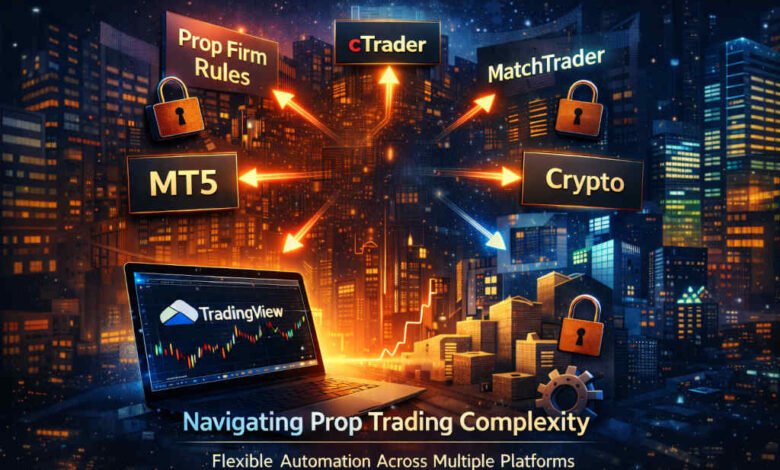
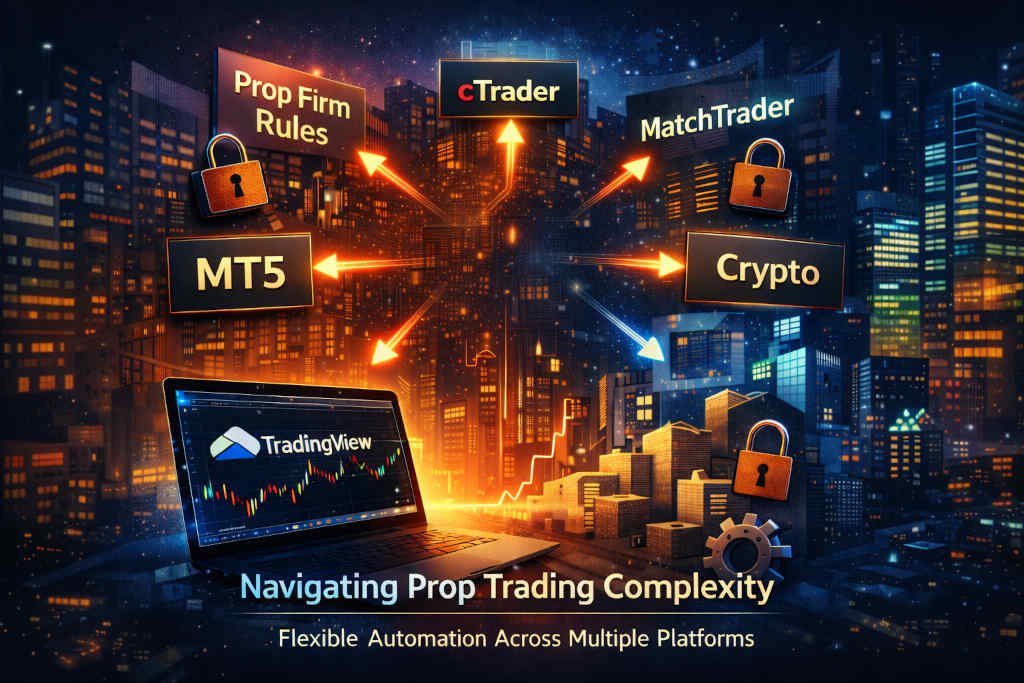
One trader may use Binance Futures for one strategy, MEXC for another, OKX for a different market, and Bybit for a separate account. Another trader may combine crypto exchanges with MetaTrader 5, cTrader, TradeLocker, DXtrade, or prop trading platforms. A basic bot built for one exchange cannot easily support this kind of multi-platform trade execution without continuous development work.
This is why maintained automated trading infrastructure matters.
The user is not only paying for a webhook URL. A webhook URL by itself is not enough. The real value is in the layer that receives the message, validates it, keeps up with platform rules, routes the instruction, handles errors, and gives the trader a more predictable execution workflow.
That is also where paid automation services become more reasonable than they may appear at first.
When a trader pays a small monthly fee for a maintained platform, the cost is not really for “sending a webhook.” It is for not spending hours on server setup, Python debugging, exchange API changes, Windows instability, Linux VPS configuration, broken dependencies, logs, and support issues. In real terms, even a low monthly subscription can be cheaper than one hour of developer time spent fixing a failed trading bot.
This does not mean that open-source tools are bad. They are valuable. Many traders learn automation through GitHub projects, and many developers build excellent scripts. But free tools usually come with one condition: the user becomes responsible for the maintenance.
If Binance rejects an order, the user has to find out why.
If MEXC changes an API behavior, the user has to update the code.
If OKX changes authentication rules, the user has to adjust the integration.
If Bybit changes a futures parameter, the user has to test the bot again.
If a webhook reaches the server but the trade does not open, the user has to inspect the logs.
For some people, that is acceptable. For many traders, it is not.
AlgoWay is built around the idea that traders need a maintained execution layer between TradingView signals and real trading platforms. It helps receive TradingView alerts and webhook signals, convert them into structured trading instructions, and route them to different platforms depending on the user’s setup. This gives traders a more practical workflow than maintaining several disconnected scripts for different exchanges and brokers.
The point is not that automation makes a strategy profitable. It does not. A weak strategy will remain weak, even with fast execution. But a good strategy can still suffer from bad infrastructure. A wrong symbol, missing stop loss, incorrect order type, forgotten pending order, or broken API integration can damage the result even when the trading logic itself is valid.
That is why execution discipline matters.
Modern algorithmic trading is not only about finding signals. It is also about making sure those signals are delivered correctly. The infrastructure between the chart and the order matters because every part of that chain can introduce errors. TradingView sends the alert, but the execution system has to understand what the alert means and where it should go.
For crypto traders, this is especially important because the market moves fast and platforms change often. API maintenance is not a one-time task. It is ongoing work. The more exchanges, accounts, order types, and strategies a trader uses, the more fragile a self-hosted setup can become.
Free bots will always have a place. They are useful for testing, education, and custom development. But when the goal is stable crypto trading automation, maintained infrastructure starts to make more sense.
A trader does not need to prove they can build every technical layer alone. Sometimes the smarter decision is to use a supported system, keep the trading logic clean, and let the infrastructure handle routing, platform updates, and execution details.
In the end, the question is not whether free bots exist. They do.
The real question is who is responsible when something changes, breaks, or fails between the TradingView alert and the actual trade.
For serious automated trading workflows, that responsibility is often worth paying for.
